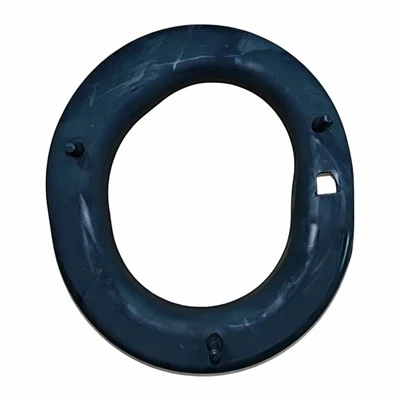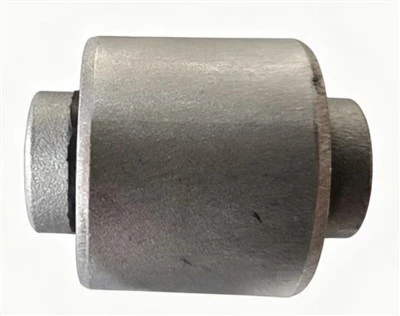
The shock absorber top mount is the final layer of damping, helping the spring reduce impact force when it's engaged. When the spring is fully compressed, we feel a relatively strong impact from the wheel. When the top mount is in good condition, the impact sound is a "thump-thump," while when it fails, the sound is a "clang-clang," indicating a significant impact force. This can damage the shock absorber and potentially deform the wheel hub.
The intermolecular interactions of the rubber in the shock absorber top mount hinder the movement of the molecular chains, exhibiting viscous characteristics that often result in an imbalance between stress and strain. This coiled, long-chain molecular structure and the relatively weak secondary forces between molecules give rubber its unique viscoelastic properties, resulting in excellent shock absorption, sound insulation, and cushioning performance. Automotive rubber parts are widely used for vibration isolation and shock absorption because of their hysteresis, damping, and reversible large deformation characteristics. In addition, rubber also exhibits hysteresis and internal friction characteristics, usually expressed as a loss factor. The higher the loss factor, the more pronounced the damping and heat generation of the rubber, and the more effective the shock absorption.