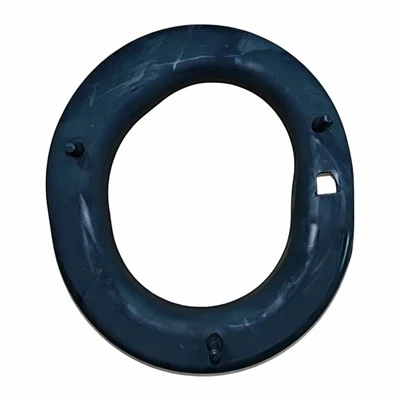
O-ring seals are a type of compression seal and self-sealing structure. As long as the O-ring has initial pressure, a reliable leak-free seal can be achieved.
O-rings typically have a compression deformation rate of 7%-30% in their cross-section. Static seals use a higher compression rate (15%-30%), while dynamic seals use a lower compression rate (9%-25%). Under internal pressure, the outer diameter of the O-ring is the same as the outer diameter of the groove; under external pressure, the inner diameter of the O-ring is the same as the inner diameter of the groove. For bore (internal pressure) seals, the maximum allowable elongation of the O-ring is 6%; for shaft (internal pressure) seals, the maximum allowable circumferential compression is 3%.
The maximum allowable extrusion clearance is related to the system pressure, the O-ring cross-sectional diameter, and the material hardness. When the pressure exceeds 5 MPa, it is recommended to use a retaining ring.
For O-ring hardness selection, a lower value of 70 is chosen for static seals, and a higher value of 80 is chosen for rotary seals.